

When Did The Super Nintendo Come Out
|
|
 | A This is a Class A commodity. It is completely upwards to code, and should require very trivial editing. |
Super Nintendo Entertainment Arrangement [ Edit ] [ Talk ]
The Super Nintendo Amusement System (officially abbreviated equally Super NES and SNES), ordinarily known as Super Nintendo, is a 16-bit home video game panel developed by Nintendo. It is the 2d video game home panel released by Nintendo internationally. The successor to the Nintendo Entertainment System, the Super Nintendo Amusement System featured enhanced graphics, a brand new controller with additional buttons, superior sound and more than features.
While not equally successful as the Nintendo Amusement System before it, the SNES all the same proved a formidable competitor in the 16-chip era, eventually seizing starting time place for the generation. The system initially had a slow start trailing backside the Sega Genesis (Mega Drive in Europe and Japan) though it largely surpassed NEC's TurboGrafx-16.
The Super Nintendo Entertainment System was host to numerous archetype video games, including titles such every bit Super Mario World, Super Metroid, Last Fantasy 6, Chrono Trigger, the original Donkey Kong State trilogy, Street Fighter II, The Legend of Zelda: A Link to the Past, Star Fox, F-Zero, and Super Mario Kart. These titles sold millions of copies and would assist cement the SNES equally the leader of the quaternary generation. 3rd parties such as Square, Enix, and Capcom would assistance in the huge success of the console.
The Super Nintendo Entertainment Arrangement was outset released in Nihon under the name Super Famicom on November 21, 1990. In a little over half a year, the system was released in North America in August of 1991 and in Europe and Australia in 1992. Nintendo too released the console in South America starting in 1993. Nintendo would eventually manufacture SNES systems with unlike casings and label them with new names such as Super Famicom Jr. and SNS-101. The new systems didn't offering annihilation new to the gaming experience, though were meant to spark interest in the system once over again long after the initial shipment. In Republic of korea, the Super Nintendo was distributed equally the Super Comboy by Hyundai Electronics. Unlike the Hyundai Comboy, which is a renamed American NES, the Super Comboy is a renamed Japanese/European model.
Information technology was the final dwelling console to have a different proper noun and dissimilar design in different countries.
The SNES was discontinued outside of Japan in 1999 and in Nihon in 2003.
History and Development
The Nintendo Entertainment System was going strong years after it was released. Almost the cease of the eighties, arrangement-sellers were even so beingness launched for the console such as Super Mario Bros. 3, which went on to become one of the best selling video games of all fourth dimension. Several Nintendo competitors wanted a slice of the pie, however, and thus released more than advanced systems meant to compete with the NES.
The first on the scene was Hudson Soft and NEC Corporation with the TurboGrafx-16 (likewise known equally the PC Engine), which they released in 1987, three years before the Super Famicom would be launched in Japan. While considered a role of the sixteen-fleck era, the CPU was actual eight-flake. Notwithstanding, the console proved formidable in Nippon. One year later Sega unleashed the Sega Genesis. Though the Genesis was more or less a failure in Nippon, the Genesis became a serious competitor in Northward America. Either mode, Nintendo realized that they needed to human activity speedily in order to counter the outcome imposed by the new hardware, and in response to the TurboGrafx-16, they started development on the Super Nintendo Amusement System.
Designer of the Famicom, Masayuki Uemura directed the development of the new system. Nintendo initially released the Super Famicom in Nippon on November 21, 1990 at a price of ¥25,000. The showtime shipment independent 300,000 SNES units, which all sold within a matter of a few hours. Nintendo shipped the Super Famicom units in secret every bit not to gain the attention of the Yakuza, who they feared would potentially steal the hardware and software. The arrangement proved so successful in its first day in part because of a launch lineup that, while astonishingly small (two games just), featured impressive titles including Super Mario World and F-Nix.
Super Mario World, the successor to Super Mario Bros. 3, is best known for introducing Mario's sidekick Yoshi while F-Zippo made extensive utilize of Fashion 7, allowing the game to do things that would have been incommunicable on the NES.
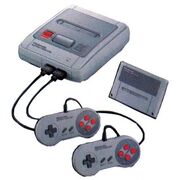
Paradigm for the Super Famicom in tardily 1989.
Due the impressive figures of the Super Famicom, several third party developers who supported Nintendo with the Famicom announced their commitment to the new system.
These tertiary parties would be pivotal to the success of the system, specially companies such as Foursquare (Final Fantasy series, Chrono Trigger), Enix in Japan (Dragon Quest series), Capcom (Street Fighter II, and Mega Man X series), and others. Western companies in North America and Europe would eventually get-go to develop titles for the system equally well including companies such as Midway (Mortal Kombat and NBA Jam). Most hard hitting titles, however, came from Japanese developers.
Nintendo would release the Super Nintendo Entertainment System in N America on Baronial 23, 1991 for $199 . Different in Japan, Nintendo of America packaged Super Mario World with the system for gratis, similarly to how they packaged Super Mario Bros. with the original Nintendo Entertainment Arrangement. The Northward American launch of the Super Nintendo Amusement Arrangement contained more titles than the Japanese launch, including Super Mario World, F-Zilch, Pilotwings, Gradius III, and SimCity.
While still not a particularly large launch, information technology did comprise many titles that would go on to sell millions. Interestingly, the Japanese branch of Nintendo did not design the American Super Nintendo Entertainment System. Instead, a man by the name of Lance Barr designed the hardware (he also designed the NES). Lance Barr explained that he didn't similar the expect of the Super Famicom, saying that it was too "soft and had no border" [1]. Nintendo Power revealed several unused designs that were drawn by Barr, all of which led to the final cosmos. Barr explained that he designed the Super Famicom in a style so that drinks could not placed on it, and that the indention in the Ten and Y buttons were fabricated so that players could tell the departure between them and the A and B buttons.
A yr subsequently the Super Nintendo Entertainment System was released in North America, the system made its style into Europe and Australia with a soft launch showtime in the United Kingdom and Republic of ireland. The European Super NES was a near straight copy of the Japanese model later on marketing reportedly found that the American version tested poorly. The colors and shape were yet, and the buttons on the controller were cherry-red, blue, yellow and dark-green like the Super Famicom controller (the American controller were shades of purple). After the release in PAL territories, Nintendo launched the system in other parts of the world including Brazil and Republic of korea.
Panel Wars
The SNES is perhaps most widely known to Americans due to the infamous panel war that existed between it and the Sega Genesis. The competition developed advertisements that would downplay the NES & SNES, showcasing the Genesis's strengths, with catchphrases such as "Genesis does what Nintendon't" and "Welcome to the adjacent level", and the repeated use of the term "blast processing" in reference to the Genesis having slightly faster clock speeds than the SNES. Additionally, Sega repeatedly mocked the TurboGrafix-16's claim of being the first 16-chip console, as the latter still used an 8-bit processor.
Sega'due south advertisements were based on extensive research on teenage subcultures, allowing for a crass, ambitious campaign that played up the Genesis every bit a more mature console though Nintendo's advertisement campaigns attempted to play up similar trends like the "Play It Loud" campaign. Sega's mature reputation was best exemplified by the home console ports of Mortal Kombat, an arcade game infamous for its big amounts of gore at the fourth dimension. While both the SNES and Genesis ports had well-nigh of the gore censored, the Genesis port outsold the SNES ane after a cheat lawmaking was discovered in the Genesis version that would restore the arcade version's violence.
The incident soured public perception of Nintendo, prompting them to outset easing up on their censorship policies from the NES era; later on Mortal Kombat games would be ported to the SNES uncensored, and these SNES versions would go on to outsell their Genesis counterparts. It is because of this that mature games such as Doom and Killer Instinct would be able to see uncensored releases on Nintendo consoles. However, Nintendo still implemented censorship on games that were developed with younger audiences in heed, removing references to drugs, religion, etc. but equally they had washed before.
During the SNES vs. Genesis panel war, the United States Congress conducted hearings on violence in video games afterwards public backlash towards Mortal Kombat and the Sega CD game Night Trap. These hearings would eventually pb to the creation of the Entertainment Software Rating Board (ESRB), which would clarify content in video games and mark them based on which historic period group they considered each video game to be appropriate for. The cosmos of the ESRB is also credited with Nintendo becoming slightly more lenient towards the publishing of mature games on their systems.
Some other element brought on past the contest was the advent of add-ons that played games on CDs rather than cartridges; said add together-ons caught public eye as CDs held significantly more space than cartridges and were much easier to industry. Among other features, CD add-ons allowed for full-motion video (albeit in a severely compressed format to fit on the disc), an idea unheard of for console games. The TurboGrafix-16 pioneered CD gaming with the release of the TurboGrafix-CD, while Sega responded in turn with the Sega CD.
Seeing this emerging marketplace, Nintendo entered talks with Sony for a proposed CD addition for the SNES. The addition eventually became the PlayStation, a 32-scrap panel which would support both SNES cartridges and CDs. Notwithstanding, Nintendo quietly abandoned the proposition after learning that the agreements for information technology would requite Sony full control over all PlayStation games, choosing instead to work with the American electronics company Phillips. Talks with Phillips eventually led to the creation of the CD-i, which featured several games based around Nintendo properties.
The CD-i ended up being a failure still, in part due to Phillips never intending for it to exist used as a video game panel, and Nintendo decided to stick with cartridges for the balance of the SNES's lifespan as long loading times and FMV-reliant shovelware dragged downward competing CD add-ons. Sony, meanwhile, took the PlayStation to Sega before they also rejected it, prompting Sony to release the PlayStation as an independent panel in 1994.
Despite stiff competition from the TurboGrafix-16 in Nihon and the Sega Genesis in the U.s.a., the SNES ultimately emerged in offset-identify due to its superior technological capabilities and potent output of games that took advantage of them to expert consequence, such as Donkey Kong Country and Star Fob, and managed to successfully stay afloat during the advent of the 32-flake era.
Today, the SNES is widely regarded as i of the greatest video game consoles of all fourth dimension. In 1996, the SNES was succeeded past the Nintendo 64, a console four times as powerful every bit the SNES though not about as successful. A year later, Nintendo of America stopped shipping SNES games to stores, soon subsequently the release of their final first-party game for the system, Kirby's Dream Country 3. The SNES was ultimately discontinued in 1999 in America and 2003 in Japan. The last official titles published for the panel were Frogger (1998) in North America and Metal Slader Glory: Director's Cutting (2000) in Japan.
Technical specifications
| | |
| Processor | Ricoh 5A22, based on a xvi-scrap 65c816 cadre |
| Clock Rates | Bus: 3.58 MHz, two.68 MHz, or 1.79 MHz Jitney: 3.55 MHz, 2.66 MHz, or 1.77 MHz |
| Buses | 3.55 MHz, 2.66 MHz, or 1.77 MHz |
| Other features |
|
| | |
| Resolutions | Progressive: 256x224, 512x224, 256x239, 512x239 Interlaced: 512x448, 512x478 |
| Pixel depth | 2, 4, seven, or viii bpp indexed; 8 or eleven bpp direct |
| Total colors | fifteen-flake RGB (32,768 colors) |
| Colors per sprite | 16 (4-bit) |
| Sprites | 128, 32 max per scanline; 8x8 to 64x64 pixels, 272 max per line |
| Backgrounds | Upwardly to four planes; each upward to 1024x1024 pixels |
| Effects | •Pixelization (mosaic) per background •Color add-on and subtraction •Clipping windows (per background, affecting color, math, or both) •Scrolling per 8x8 tile •Mode 7 matrix operations |
| | |
| Processors | Sony SPC700, Sony DSP |
| Clock Rates | Input: 24.576 MHz |
| SPC700 | 1.024 MHz |
| Format | xvi-bit ADPCM, 8 channels |
| Output | 32 kHz xvi-scrap stereo |
| Effects | •ADSR envelope control •Frequency scaling and modulation using Gaussian interpolation •Echo: viii-tap FIR filter, with up to .24s filibuster •Noise generation |
| | |
| Main RAM | 128 kB |
| Video RAM | 64 kB main RAM 512 + 32 bytes sprite RAM 256 × 15 bits palette RAM |
| Audio RAM | 64 kB |
Games

Super Mario World is the all-time selling SNES game.
The Super Nintendo Amusement Arrangement is popular due to its wide selection of triple-A titles from Nintendo and numerous 3rd parties. Some of the most popular games released on the organization by Nintendo include Super Mario World, Ass Kong State and its sequels, Super Mario Kart, The Legend of Zelda: A Link to the Past, Star Flim-flam, Super Mario World 2: Yoshi'southward Island, F-Zero, Super Metroid, Pilotwings, and others.
Third parties were also largely successful on the SNES, with Foursquare, Enix, Capcom, Midway and others striking it big with titles such every bit Final Fantasy Four-Half-dozen, Chrono Trigger, Dragon Quest VI, NBA Jam, Street Fighter II (and its various incarnations), Disney titles and more.
With the release of the Game Boy Accelerate, many classic SNES titles were ported over to the handheld, one time over again receiving a large amount of success. Some of the SNES games re-released as Game Boy Accelerate titles include Super Mario Bros. ii-3, Super Mario Globe 1-ii, The Legend of Zelda: A Link to the Past, the unabridged SNES Final Fantasy library, all 3 Donkey Kong Country games, and others.
The Nintendo DS was likewise used to recreate archetype SNES titles such as Chrono Trigger, Kirby Super Star Ultra and Final Fantasy IV being released to wide acclaim and large sales, proving that even though the games were over 10 years old at the time, they were still very enjoyable. Kirby Super Star Ultra, a remake of Kirby Super Star, went on to sell more than than the other two Kirby games for the DS.
Top ten best-selling SNES games
The following are the peak ten all-time-selling games in all the regions.
- Super Mario Globe - 20.61 million copies
- Super Mario All-Stars - 10.55 million copies
- Donkey Kong Country - nine.3 million copies
- Super Mario Kart - viii.76 one thousand thousand copies
- Street Fighter 2: The Globe Warrior - 6.iii 1000000 copies
- Donkey Kong Country 2: Diddy's Kong Quest - five.15 million copies
- The Legend of Zelda: A Link to the Past - 4.61 million copies
- Super Mario World two: Yoshi's Island - 4.12 million copies
- Street Fighter Two Turbo - 4.1 1000000 copies
- Donkey Kong Country 3: Dixie Kong'southward Double Trouble! - 3.51 million copies
Variations
Several variations of the Super Nintendo Amusement Organization were released. The Japanese version, known every bit the Super Famicom, was the initial pieces of hardware. The European and Australian version, collectively known equally the PAL version, retains a similar appearance to the Japanese version while the American SNES was built from scratch and designed past Lance Barr. Both Nihon and N America received upgrades to the SNES in the class of the Super Famicom Jr. in Japan and the SNES-101 in N America. Japan besides received a Precipitous-adult television set with a Super Famicom built in called SF1.
Peripherals
Similar the NES before information technology, a diverse set of accessories were released for the Super Nintendo over the form of its lifetime. Some of the peripherals, such equally the Super Scope, were evolutions of NES accessories (in this case, an evolution of the NES Zapper), while others were wholly unique to the system such as the SNES Mouse. The Super Nintendo Entertainment Organization controller is a huge improvement over the Nintendo Entertainment Organisation controller.
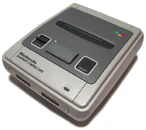
Super Famicom.
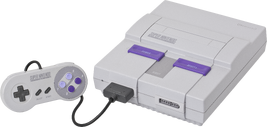
SNES (Northward America).

SNES (Eu/AU).
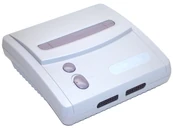
Super Famicom Jr.
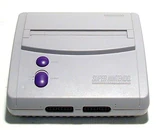
SNES-101.
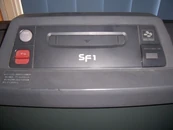
SF1.
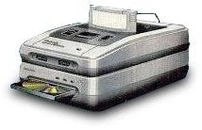
SNES CD-Rom (unreleased).
It features ii shoulder buttons (a first for a video game controller), four confront buttons (two more than the NES controller had), a D-pad (pioneered past the Game & Watch game Ass Kong), and a kickoff and select push button. The controller itself is often called a "dog-bone". This controller fashion has get very popular among aftermarket controller companies, and the push selection and layout is the basis for many other console controllers.
The SNES-CD was a CD-ROM drive addition for the SNES, adult jointly by Nintendo and Sony. The device was somewhen fabricated standalone and revealed at CES 1991. However, Nintendo had by then made a deal with Philips to create the CD bulldoze, and attempts by Nintendo and Sony to repair relations failed. The Philips CD drive somewhen became the Philips CD-i, and the Sony standalone device eventually became the Sony PlayStation.
Reception and Legacy
Today the Super Nintendo Entertainment System is looked back at with high regard. When critics and publications listing the greatest video game systems of all time, the Super Nintendo is commonly well-nigh the top. CNET columnist Don Reisinger wrote an article titled "The SNES is the greatest panel of all fourth dimension", listing its strengths over other systems that also regularly agree that title including the original Nintendo Amusement System, the SEGA Genesis, and the PlayStation, maxim "... call back of the earth the SNES spawned. Instead of releasing a veiled copy of the NES to arrive on the fight with Sega earlier, Nintendo created a follow-up that was worthy of the 'Super' moniker and gave developers the license they needed to create the legendary titles that we however play today."
During the seventh generation, IGN posted an commodity on their website listing the top twenty five video game consoles. The Super Nintendo Amusement Organisation was listed as number iv, existence surpassed merely by the PlayStation 2 (3), Atari 2600 (2), and Nintendo Entertainment Arrangement (1). IGN highly praised the SNES, stating that "when it comes to a pure concentration of AAA titles, few consoles – if whatsoever – can stand up to the Super NES.". In the article, Nintendo writer Craig Harris claimed that the SNES was his kickoff system that he bought on day 1, and that he spent more than time playing Pilotwings than Super Mario World.
Chris Buffa of GameDaily.com listed the Super Nintendo Entertainment System equally the fifth best system of all time in 2008, maxim "when it comes to a pure concentration of AAA titles, few consoles – if any – tin can stand to the Super NES."
The Super Nintendo Amusement Arrangement was the last panel to take a different design built for American and Japanese audiences. A trend that didn't concluding long, Lance Barr claims that building a unique design for the major territories had its ups and its downs, saying "Individually designing a product for a given market would definitely entreatment to more consumers, and would be seen as having a more than current, in way look." He went on to say that while the designs for each marketplace are similar, at that place are occasionally subtle differences, such as in the colour of the system. This is specially evident in Nintendo's newer handhelds and, to a lesser extent, accessories.
During the launch of the Super NES, TIME magazine wrote an article discussing the release of the system and concluded with a piece wondering whether or not Nintendo would be successful with the SNES or end upward like Atari, maxim "Nintendo should be able to drum up enough excitement to sell out this year's supply of 2 1000000 Super NES sets. What's less clear is how long that enthusiasm will terminal. At all-time, say analysts, over the next five years Nintendo will sell most two-thirds as many of the new systems as it sold of the old. At worst, Nintendo could end upward like Atari, which in the early 1980s tried to supplant a wildly successful video-game role player with one that was more powerful but incompatible. Atari ended up with a mountain of unsold game cartridges that got loaded onto dump trucks and used equally landfill." [2]
Sales
The Super Nintendo Amusement Organisation performed phenomenally, selling 49.10 million units worldwide (23.35 million in North America and 17.17 million in Japan). The Super Nintendo's master competitor was SEGA's Genesis system, which became popular due to SEGA's advert and the release of Sonic the Hedgehog, as well as several "mature" titles intended for older gamers. Some credit the SNES's success over the Genesis to Capcom'due south Street Fighter two video game, which took over a twelvemonth to port to the Genesis. Some other of import factor was the fact that Sega discontinued the Genesis far earlier than the SNES, every bit while the Genesis died around 1997-1999, the SNES remained popular well into the year 2000.
The games released for the Super Nintendo Entertainment Organisation also performed admirably. Super Mario World is the best selling game for the system, partly due to the fact that in several territories it was packaged with the system. Donkey Kong Land and Super Mario Kart proved to be the nigh successful stand alone titles at an estimated eight million copies sold each. Capcom sold millions of copies of its Street Fighter 2 series, of which several iterations were released for the SNES. Capcom also released the game for the Genesis, though it wouldn't release until a yr subsequently the SNES version launched.
- Nintendo Entertainment System (Predecessor)
- Nintendo 64 (Successor)
- Super Famicom
- Super Nintendo Entertainment Organization Games
- Super Scope
- Satellaview
Trivia
- Information technology was known in development as NES2 or Nintendo Entertainment System 2.
References
- ↑ https://www.tradeinpost.com/product/super-nintendo/

When Did The Super Nintendo Come Out,
Source: https://nintendo.fandom.com/wiki/Super_Nintendo_Entertainment_System
Posted by: rousseauthavetind.blogspot.com
0 Response to "When Did The Super Nintendo Come Out"
Post a Comment